
Hold and Win titles Creates Emotional Investment
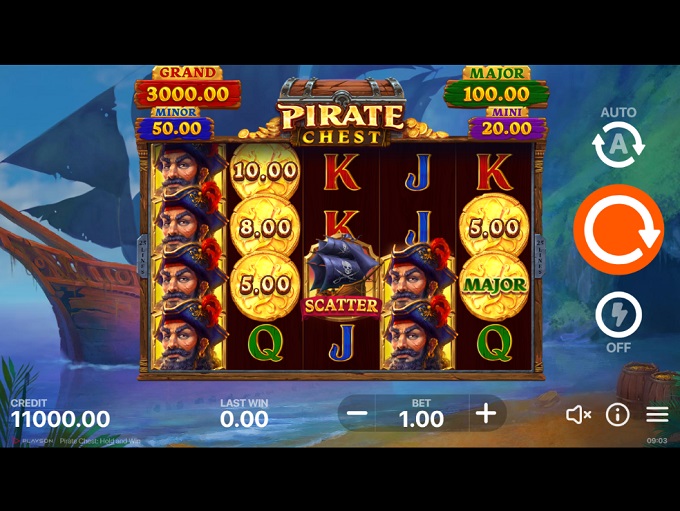
The slot industry is saturated with releases that stack on feature after feature, chasing complexity for its own sake, yet many of them never spark a real emotional connection https://holdandwin.eu/. Hold and Win Games reversed that approach. The studio builds everything around a single, readable bonus event that turns each spin into a occasion that might actually matter. Their catalog proves that player retention isn’t derived from packing more mechanics into a game. It arises from skillfully arranging anticipation, near-miss psychology, and the sensory satisfaction of watching coins firmly lock into place on a grid. This review picks apart how the Hold and Win framework creates emotional investment through design architecture, sound feedback, visual pacing, and mathematical modeling that encourages sustained engagement without ever feeling predatory.
FAQ
What makes the Hold and Win mechanic versus standard free spins?
As opposed to free spins where the player views passively reels spin without interaction, the Hold and Win mechanic creates an active sequence where bonus symbols fix on the grid and remaining positions respin individually. This transforms each moment into a discrete event with anticipation, near-miss feedback, and a gradual accumulation of visible rewards. The player undergoes a rhythmic cycle of hope and resolution that creates stronger emotional attachment than the continuous, less granular action of traditional free-spin bonuses.
How exactly does Hold and Win Games maintain emotional engagement during base game play?
The studio uses several techniques to keep base game spins emotionally relevant. The persistent collection meter displayed on the main screen gives players a long-term goal that advances across multiple sessions. Bonus trigger teasers—where two bonus symbols land and the third nearly appears—create near-miss moments that generate anticipation without triggering the feature. The base game soundtrack and visual pacing are also adjusted to feel like a building prelude, making every spin feel like a step toward the next bonus event rather than empty filler between features.
Are the outcomes of the bonus outcomes in Hold and Win Games set in advance or impacted by player behavior?
All bonus outcomes are algorithmically determined at the moment the feature triggers, consistent with regulated slot game standards. However, the design deliberately presents the respin sequence as a series of distinct, suspenseful events that feel reactive to player attention. The illusion of agency—watching each cell resolve, hoping for specific symbols, and feeling a sense of personal accumulation—is thoroughly preserved through pacing and feedback design. This creates an emotional experience that feels interactive even though the underlying mathematics are set and random.
What purpose does the collection meter play in long-term player retention?
The collection meter functions as a meta-layer of emotional investment that extends across multiple bonus triggers. By storing specific symbols and displaying visible progress toward thresholds that unlock enhanced features, it gives players a reason to value every bonus outcome—even modest ones—as contributing to a larger goal. This exploits the goal-gradient effect, where motivation increases as a target approaches. Players develop a sense of personal history with the game, making session termination feel like abandoning an ongoing project rather than simply stopping a gambling activity.
Why do Hold and Win titles work well on mobile devices compared to desktop?
This Hold and Win format is ideal for mobile play since its bonus sequences deliver complete emotional arcs in compact timeframes, typically under twenty seconds. The touchscreen interface includes haptic feedback on compatible devices, creating a physical channel for the emotional beats of each coin lock. The visual design prioritizes clarity and contrast over fine detail, ensuring that bonus symbols, collection meters, and jackpot values remain legible on smaller screens without needing zoom. This mobile-first architecture adapts to the fragmented attention patterns of modern players while maintaining full emotional impact.
Visual approach as an Emotional Amplifier
The studio’s design style across its catalog doesn’t depend on photorealistic rendering or excessive particle effects. Hold and Win Games employs a design philosophy built around clarity, contrast, and symbolic resonance instead. Bonus symbols are almost always rendered as gleaming coins, treasure orbs, or jewel-like tokens that possess immediate cultural associations with value and accumulation. The base game grids sit against deeper, more subdued backgrounds that fade during the bonus phase, letting the locked symbols dominate visual attention completely. This calculated contrast makes sure that emotional focus sharpens precisely when it matters most, keeping cognitive load low while enhancing the perceived significance of each successful lock.
Color theory and Symbol Hierarchy
Hold and Win titles employs a rigorous color hierarchy that steers player attention without requiring conscious processing. Standard paying symbols in the base game often feature cooler, desaturated palettes—blues, silvers, and muted purples—that indicate routine play. When the bonus round starts, the locked symbols transition to warm metallics, deep golds, and occasionally ruby reds that the human visual system instinctively connects with reward and urgency. This chromatic shift is not arbitrary. It mirrors the color-coding found in auction environments and luxury branding, where gold tones elicit subconscious valuation responses. The studio strengthens this further by ensuring that the highest-value bonus symbols—typically jackpot or grand prize tokens—are physically larger and give off a subtle glow that differentiates them from standard coins.
The Part of Particle Feedback and Screen Shake

Micro-interactions during the Hold and Win sequence are fine-tuned with a accuracy many competitors ignore. When a new bonus symbol lands and locks, the studio utilizes a brief particle burst that originates from the symbol’s edges and disperses within roughly 300 milliseconds. A subtle screen shake or grid vibration accompanies this, providing haptic-adjacent feedback even on desktop platforms. The cumulative effect is that each successful lock feels physically weighty, as though the player has secured something of genuine substance. When a respin cycle completes without a new symbol, the absence of these effects creates a palpable sense of loss that motivates continued engagement. This binary feedback loop—presence versus absence of sensory reward—keeps the emotional arc of the bonus round tightly structured.
Mobile Responsiveness and Emotional Micro-Interactions
The Hold and Win Games portfolio is engineered with mobile-first approaches that recognize how modern players consume slot content in distracted settings. The bonus mechanic’s design—short, discrete respin sequences that can be fully enjoyed in under twenty seconds—fits perfectly with mobile usage patterns where sessions may be disrupted at any moment. Unlike bonus frameworks that require extended uninterrupted attention to build emotional momentum, the Hold and Win format provides a complete emotional arc even in a brief elevator ride or coffee queue wait. This doesn’t mean the games are shallow. Rather, the studio has streamlined the emotional journey into a format that respects the player’s time constraints while losing none of the psychological impact.
Touchscreen interfaces add another dimension to the emotional experience. On mobile devices, the grid is located centrally within thumb reach, and the respin animation often includes a subtle haptic pulse on compatible devices when coins lock. This tactile feedback creates a direct physical channel for the emotional beats of the bonus round, making the experience feel more intimate and immediate than desktop play. The studio’s UI designers also ensure that the collection meter, jackpot values, and bonus symbol counts are clear at a glance without pinching or zooming, reducing the cognitive friction that can pull players out of an emotionally engaged state. By treating mobile not as a secondary platform but as the primary emotional delivery system, Hold and Win Games ensures its psychological architecture works identically across all screens.
Comparison with Competing Bonus Frameworks
To truly grasp the emotional engineering in Hold and Win Games, it is beneficial to compare the studio’s offerings against other leading bonus structures in the slot market. Free-spin bonus rounds, while common, usually front-load their emotional impact into the trigger moment and then reduce the player to a spectator observer role during the spins themselves. The player observes reels turn but has no agency, no moment-by-moment feedback loop, and no impression that their attention influences outcomes. The Hold and Win framework, by contrast, turns every respin a separate event where the player actively hopes for a specific visual outcome—a coin landing, a symbol locking—and gets immediate, detailed feedback on whether that hope was realized or deferred.
Cascading or avalanche mechanics represent a nearer competitor, since they also generate prolonged sequences with several payout opportunities. But these systems usually process so rapidly that individual moments fuse, lessening the emotional granularity that Hold and Win Games retains through its deliberate pacing. The studio’s approach to break briefly between each respin, to display each lock individually, and to build toward a final tally rather than a steady tumble of wins produces a essentially different emotional texture. It’s the distinction between going through a suspenseful paragraph one sentence at a time versus glancing over an entire page. The former enables emotion to gather, while the latter just states an outcome. This distinction is essential to why Hold and Win titles produce stronger player attachment.
Design Evolution Paths and Emotional Sustainability
As the slot market continues to evolve, the emotional engineering principles that Hold and Win Games has perfected will face new challenges from player expectations, regulatory pressures, and technological shifts. The studio’s core strength—its ability to build concentrated emotional arcs within a single, clearly defined bonus mechanic—places it favorably for a landscape where attention spans are progressively shorter but emotional authenticity remains highly valued. Future iterations may examine hybrid models where the Hold and Win event is integrated with progressive narrative elements, character-driven themes, or social features that allow players to match bonus results within communities, bringing a layer of shared emotional experience to the individual journey.
The viability of the emotional investment model also hinges on the studio’s willingness to avoid the temptation to overexploit the psychological connection it has established. Games that generate genuine emotional attachment can easily be steered toward higher volatility or more aggressive monetization, but doing so would undermine the trust that makes the emotional loop operate in the first place. Hold and Win Games has shown through its current portfolio that it grasps this balance, upholding payout models and bonus frequencies that reward emotional engagement without exploiting it. The studio’s long-term success will depend on continuing to treat player emotion as a delicate asset to be cultivated, not a resource to be drained, making sure that each Hold and Win event remains a moment of authentic anticipation rather than a calculated manipulation.
The Mental Framework of the Hold Feature
The central trick Hold and Win Games achieves is turning a passive spin outcome into an interactive, drawn-out moment that the player perceives as partially their doing. Bonus symbols arrive and stay while the rest of the grid respins. That period between the starting cue and the end result isn’t superficial. It extends anticipation across several discrete moments, which significantly modifies the dopamine release pattern. Players experience a mini-cycle of hope with each additional symbol arrival, then a quick restart as empty cells flash, then a renewed burst when a different token secures. The studio’s designers recognize that this rhythmic alternation between winning and waiting pulls harder than a single instant reveal ever could.
Neuroscientific research on upcoming gain points to something surprising: the brain’s dopaminergic response climaxes during the waiting period, not at the instant of gain. Hold and Win Games capitalizes on this principle. Respin sequences generally extend between 5 to 15 seconds, a period sufficient to create substantial emotional charge but short enough to prevent cognitive disengagement. The visual design amplifies the effect through delicate movements. Coins tremble slightly before freezing. A short stop pauses before each respin starts. A full-display flash appears when the end total computes. These tiny engagements communicate to the player that something significant is unfolding, transforming what could be a technical element into a story-driven moment with personal stakes attached to every secured sign.
Player Autonomy and the Perception of Control
Hold and Win Games does not provide genuine player choice during the bonus round, yet the design generates a powerful perception of control that increases emotional investment. The act of watching symbols lock, hoping for specific outcomes, and mentally counting remaining positions on the grid activates the same cognitive systems that engage during skill-based challenges. Players develop personal rituals and superstitions around the bonus round—holding their breath during the final respin, mentally willing a jackpot symbol to appear, or feeling that they have somehow earned a good result through their attention and patience. The studio’s design team understands that this perceived agency, even when mathematically irrelevant, dramatically raises the emotional stakes of each bonus event.
- Players mentally track remaining empty cells and assess the probability of filling them, engaging analytical thinking.
- The pause between respins enables micro-moments of hope that feel self-generated rather than system-delivered.
- Visual feedback for each locked symbol creates a sense of accumulation that the player attributes to their own persistence.
- Near-miss outcomes—where one empty cell remains—generate a powerful urge to try again that feels like personal determination.
- The final tally reveal is presented as a culmination of the player’s own bonus journey, not an arbitrary system payout.
This illusion is carefully preserved through design choices that never break the fourth wall. The game never explicitly states to the player that outcomes are predetermined or that their emotional experience is being managed. Instead, the interface displays the bonus round as a sequence of discrete events where each respin feels like a fresh opportunity, even though the mathematical reality is that the entire bonus outcome was determined at the moment of trigger. By preserving this ambiguity, Hold and Win Games allows players to experience genuine emotional highs and lows that feel self-authored, which is precisely the psychological state that builds long-term loyalty to a game title or studio brand.
Computational Design That Honors Emotional Pacing
The emotional engagement produced by Hold and Win Games isn’t just a result of presentation. It’s deeply embedded in the mathematical models that regulate symbol distribution, bonus frequency, and payout curves. The studio develops its games with bonus hit rates that generally sit between one in 80 and one in 150 spins, a spectrum that ensures the Hold and Win event appears as a meaningful occurrence rather than a routine interruption. When the bonus initiates, the initial symbol count is precisely adjusted so that players begin with a impression of opportunity—usually between three and five symbols on a grid that can accommodate up to fifteen or twenty. This initial setup creates what behavioral economists call an progress endowment effect, where the player views themselves as already somewhat accomplished and becomes inspired to complete the set.
- Bonus trigger frequency is established to preserve event significance without inducing fatigue.
- Initial symbol counts create a impression of partial completion that stimulates completionist behavior.
- Payout curves are engineered so that the bulk of bonus rounds yield between 15x and 40x bet, fostering trust.
- Jackpot-tier symbols appear with sufficient rarity to maintain their emotional impact when they finally land.
- Respin probabilities are weighted to guarantee that empty spins feel tense rather than punitive.
The mathematical framework also takes into account the emotional letdown that can arise when a bonus round ends. Hold and Win Games commonly arranges payouts so that even a humble bonus outcome—say, eight or nine symbols—offers a return that appears commensurate to the anticipation invested. The studio avoids the design trap where bonus rounds regularly finish with negligible payouts, a approach that erodes trust and trains players to anticipate letdown. Instead, the payout distribution is designed to produce a soft bell curve where extreme low outcomes are feasible but statistically uncommon, ensuring that the bulk of bonus experiences bolster the positive emotional loop rather than damaging it.
The Accumulation Feature and Sustained Emotional Storylines
A number of releases in the Hold and Win Games portfolio present a ongoing gathering mechanic that extends emotional investment beyond individual session boundaries. In these designs, particular bonus markers—often adorned with distinctive iconography such as regal emblems, key symbols, or vivid gemstones—are accumulated across several bonus activations and saved in a ongoing gauge visible on the main game screen. When the meter attains specific levels, it triggers upgraded bonus features with expanded matrices, more free respins, or multiplier effects. This extra dimension changes each bonus activation from an standalone moment into a chapter in a longer narrative, offering players a motive to be invested in results even when the direct prize is small.
The psychological mechanism at work here is the goal-gradient effect, where motivation intensifies as a visible target comes closer to completion. Hold and Win Games positions the accumulation gauge visibly, often with a glowing indicator that becomes livelier as the player nears the next threshold. Players who might otherwise end a session after a average bonus game will regularly persist to achieve that next gathering target, not because the projected payout has shifted, but because the emotional architecture of the game has fostered personal involvement in a process that now has individual significance. This design decision shows a advanced grasp of how digital games can foster connection through remembrance and progression, not just through direct payoff.
Sound Design and Tempo Anticipation
Audio engineering in Hold and Win Games titles operates as an subtle conductor of emotional states, steering players through stress peaks and calm valleys with exceptional subtlety. The core game soundtrack typically functions at a stable, unobtrusive tempo that sets a starting point of relaxed engagement. When the bonus event takes place, the music does not just intensify. It experiences a compositional transformation where rhythm elements become less dense, allowing distinct sound effects to take up more acoustic space. Each coin drop is accented by a clear metal chime that ascends in pitch as more icons build up, forming an ascending melody sequence that the player intuitively seeks to complete. This compositional technique takes from the psychology of incomplete musical phrases, where the mind actively wants completion.
The studio’s sound designers also use strategic silence during critical moments. After a notably major symbol fixes—such as a jackpot symbol or a multiplier coin—there is commonly a beat of silence before the next respin starts. This break acts as an emotional inhalation, giving players a small part of a second to absorb the significance of what just occurred. The subsequent respin then comes with a slightly accentuated percussion hit that seems like a fresh beginning. By treating the bonus stage as a organized musical composition rather than a series of separate sound effects, Hold and Win Games ensures that the audio experience supports the same emotional arc that the visual elements and mechanics are creating simultaneously.